
At last, I’ve started to even have nightmares about achieving ki-ken-tai no icchi in my dreams. This is Haru-chan, also known as the Kendo Cat. Feeling a bit sleep-deprived, I’ve just finished my morning practice.
Today, there were a few small things that went well, but overall, it ended with the feeling that I still have a long way to go…
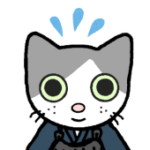
It’s seriously, really hard to strike
a proper men in accordance with the basics.
By the way, my dojo is for adult beginners, so there are no children students.
But sometimes, when I go to other dojos for practice, I see children training freely and energetically.
When I watch their kendo, I feel like, “Wow… their movements are so free and natural.”
Come to think of it, when I practice striking men myself, I hardly ever feel like my body is moving freely.
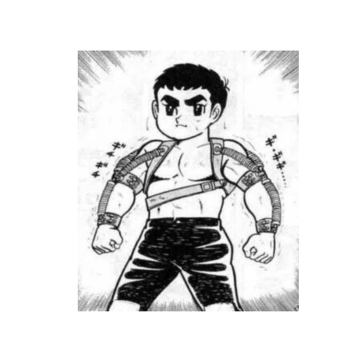
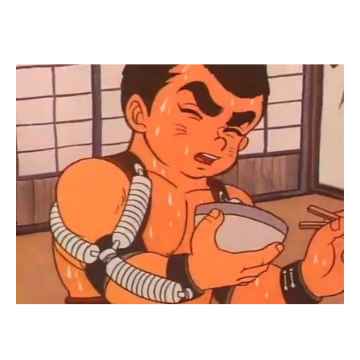
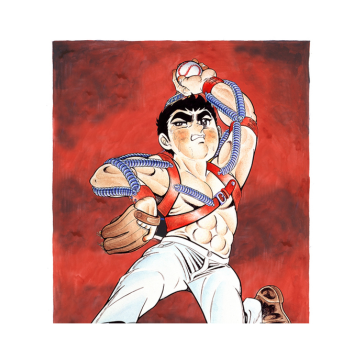
Especially lately, since I’ve been trying to fix my bad habits, it feels more like I’m being restrained—like my body is heavy and restricted. It’s almost as if I’m wearing a corrective brace.Even Hoshi Hyuma would be shocked!
And then I start to wonder.
What is this difference…?
It feels like there’s a clear difference in how children and adults learn kendo.

Hi!
It’s your familiar detective, Haru-chan.
Today as well, I will solve your mystery!
Below are the results of Detective Haru-chan’s reasoning. Please note that her interpretation may be incorrect.
If I had to summarize the difference between children and adults in one word, I think one major factor is the difference in “amount of experience.”
After all, between a cat who has lived nearly half a century since being born into this world, and a kitten who has only lived 5 to 10 years, it’s natural that everything they see, touch, taste, hear, and even smell (?)—their experiences in all these areas are completely different.
On top of that, most kendo movements are not something we encounter in daily life.
So for children, who already have fewer life experiences, when something completely new appears right in front of them, their only way of learning is to open-minded and imitate what they see.
But precisely because they learn with that open and receptive mind, compared to adults, they may be able to acquire correct movements more quickly.
And since those movements become natural to them, that might be why they look so free.

In learning kendo,
an ♡open and receptive mind♡ is super important
On the other hand, adults unconsciously try to solve problems using methods they are already used to, movements they are good at, or even the physical strength they have developed. That might be why things don’t go well. I am definitely like that. I’ve been right-handed for over half a century, so my right hand just keeps taking over.
If I could use my whole body naturally, I should be able to generate large power with ease…
But instead, I try to strike men while my shinai and my arms are fighting each other,
or while my upper body and lower body are in conflict.
In both cases, at the final moment after striking men, the monouchi is “touching” the target, so it creates the illusion that I did it correctly…
But in reality, I was doing something completely different, and I didn’t realize it for a long time.
And I can’t say this too loudly, but actually… I think there’s an “overconfidence” inside me that says, “There’s no way I can’t do something this simple.”
This is quite embarrassing
Once an incorrect form becomes ingrained, it’s a straight path into the terrifying “bad habit hell.”
It starts with admitting that what I believed I could do for so many years was actually wrong.
Then, from there, I have to relearn completely unfamiliar body movements from scratch.
It truly feels like ascetic training.
Because I have to recognize my own ego, face it, and fight against it. ← This is where I am now
The ascetic training… i-it’s tough. Adult cats really do become complicated… sigh.
But on the other hand, I believe adults also have advantages that come from accumulating many life experiences over the years.

Adults have their good points too
In other words, even when adults encounter kendo movements for the first time, they can sometimes think, “Ah, maybe it’s like that kind of feeling?” and pull a similar image from their past experiences.
For example… the following may be a bit hard to understand because it’s mixed with Haru-chan’s unique world:
🌸 Moving from the Hara (core), moving from the Koshi(back) = like a pyramid ▲ slowly sliding forward (even though pyramids don’t move on their own)
🌸 Lowering the center of gravity slightly and pushing the whole body strongly with the left foot to generate power = like pushing a refrigerator during a move (though you wouldn’t actually do it because you’d damage the floor and get in trouble)
🌸 Pushing the body forward with the left foot and stepping in powerfully = like the sponge bullet from a grade school science experiment air cannon (this one might be especially confusing, but it’s that thing that gets compressed from behind and then shoots forward—pop!)
🌸 After pushing off with the left foot, smoothly sending the whole body forward = like the moment you jump onto a train in a rush and it starts moving right away (also kind of confusing…)
🌸Moving without bouncing up and down during suriashi = like having a kitten sitting on your head (if it falls, that would be a disaster!)
When I can’t immediately imitate the teacher just by watching, I use my “Haru-chan Super Computer” to conduct a massive search.
From my past experiences, I find the closest possible image.
This is exactly what I call the “Adult Method.”
Once I find the right image, it’s strangely amazing—somehow, even though I was struggling just moments ago, I suddenly become able to move more or less correctly.

Huh? I can suddenly do it…
and somehow my body feels lighter.
Thinking about it this way, it starts to feel like there are two ways of learning kendo movements: the “Child Method” and the “Adult Method.”
Ideally, I would like to always learn with the “Child Method,” with a pure and open mind.
But as a middle-aged cat who has experienced all the bitter and sweet things in life, I unconsciously fall into my own way of doing things.
I don’t think learning in one’s own way is necessarily bad, but when I think about how many more years I can practice kendo, I honestly don’t want to take too many detours.
So when I’m practicing and I feel things like, “Ah, my shinai and I just fought each other,” or
“My upper body and lower body are totally disconnected!”
I try to pause for a moment and rely on my “Haru-chan Super Computer.”
That said, in reality, I can’t always find the perfect image right away.
At times like that, my ultimate technique appears: the “Sound Effect Method.”
With this method, I closely observe teachers who demonstrate beautiful and powerful kendo, and I turn each of their movements into sounds.
Like:
“Pa!!”
“Slaaaash!!”
“Ta-tan!!”
“Swoooooosh!!”
“Blazeeeeee!!”
When using the “Sound Effect Method,” my body often doesn’t move according to the imagined sounds, but at the very least, it helps me realize that something is definitely missing.
So I incorporate this method from time to time as well.
Ahh…If only I could turn back time and return to my pure kitten days… distant gaze
But since that’s not possible, there’s only one thing I can do now.
Face what I cannot do head-on,
and hold countless “meetings” with my body and my shinai, working together to find solutions.
And with that, I’ll be heading to practice again tomorrow♪
【Comment Dojo】