
Last week turned into a “mitori-keiko (watching practice) week” for me for the first time in quite a while.
The reason was that I had a rather spectacular fall during a certain kendo tournament held in late June, and starting the next day, I developed mild whiplash symptoms.
Why did I end up falling like that? The answer is simple: it was 100% my own fault.
Considering my age, body type, and kendo experience, I should have known that when facing opponents who are much younger than me, significantly larger than me, and far more speedy and powerful, I needed to enter the match with an appropriate strategy.
And yet, on the day of the tournament, I wasn’t thinking about any of that. I was thinking only about one thing: how to land my own men strike without getting hit.
Then, the very moment I launched my men attack, I collided with an opponent who was vastly bigger than me, and in the blink of an eye, I was sent flying backward in rather spectacular fashion.

It happened in the blink of an eye.
Fortunately, I didn’t hit the back of my head, but it was definitely one of those falls where, had things gone slightly differently, it could have been much worse…
I did worry for a moment, “Uh-oh… how bad is my neck going to be?” But after taking a week off, I was completely fine♪
I’m grateful that I’m able to practice again, and I’m also grateful to my body for working hard to recover. I’m planning to return to practice again next week.
Today, taking this experience into account, I found myself thinking once again about what “competing in tournaments” really means to me.
In human years, I’m a kendo cat approaching sixty.
Since I’m quite short—and on top of that, only about two heads tall as a cat—I really have to be careful about my center of gravity and balance. If I’m not, it’s actually quite easy for opponents to knock me over. Just like what happened in this tournament♪
So why do I willingly choose to compete against kenshi who are far younger than me and overflowing with energy?
Why do I keep entering tournaments when, in most of them, I’ve done nothing but lose?

Competing against people who are
30 to 40 years younger than you
isn’t something you see very often in other sports…
The answer is one thing.
It’s because I want to know whether I can actually demonstrate the goals I’ve been working on in my daily practice during an actual match. More specifically, I want to know whether I can win a match while successfully accomplishing those practice goals.
And,
at the same time, I want to know what I’m still lacking.

Ah! I said there was only one answer,
but apparently there were two♪
Since I rarely visit other dojos for practice, tournaments are one of the few places where I get to fight people mostly I’ve never fought before.
But I believe that no matter who I’m facing, if I can faithfully do what I practice every day, then in theory, I should be able to win…
For me, a tournament is the place where I test whether that idea is actually true, rather than just being a “theory on paper.”
By the way,
after all the tournaments I’ve entered, I’ve noticed something interesting.
Sometimes I win, but still feel strangely unsatisfied afterward.
Other times,
I lose, yet somehow walk away feeling a sense of accomplishment and a clear, refreshing sense of satisfaction.
Have any of you ever experienced that?

When I win, I’m always happy♪
I think the difference ultimately comes down to what I am truly prioritizing when I step onto the court.
For example, there are times when the final result itself is the most important thing. In those moments, winning becomes the primary objective, and naturally, my emotions rise and fall based on the outcome.
On the other hand,
there are times when winning would certainly make us happy, but I am more concerned about how I fought than whether I won.
For example,
suppose there’s a certain “trick” that has allowed me to score debana-kote with an 80% success rate. But one day I decide, “I don’t want to keep winning by relying on such a cheap trick forever!”
In that case, I’d probably tell myself, “Alright! In today’s tournament, I’m banning my usual trick debana-kote. No matter what happens, I’m going to fight with straightforward kendo.”
However, if the match drags into overtime and my desire to win becomes overwhelming, I may find myself using that “forbidden move” after all.
Not unconsciously…
but consciously.
And even if I win that match, it won’t feel like a victory I can celebrate wholeheartedly.
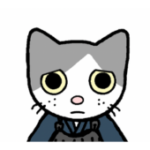
Even if people say, “Congratulations!”,
all I can do is force a smile.
Because deep down, I know exactly what happened.
I lost to myself, even though I won the match.
My heart knows that I allowed my own desire to rob me of an opportunity to grow.
Personally, I don’t believe there’s much meaning in entering a tournament without first deciding exactly what I want to achieve there.
What is it that I want to test in this tournament?
Only after deciding that can I face any opponent without hesitation and say to myself, “Alright, let’s go!”
Unfortunately, as embarrassing as it is to admit, after all the tournaments I’ve entered, I have failed to achieve my own goals in nearly ninety percent of them.
In a way, tournaments are merciless.
Every single time, they make it painfully clear exactly what I’m still lacking.

It shove harsh reality right in my face and yell,
“LOOK AT THIS!!”
I’m a cat with emotions, after all, so of course there were times when losing made me feel frustrated and sad.
But when I watch the video afterward and reflect on what was happening inside my mind during the match, I quickly find myself thinking:
“Well… of course I lost…”
And almost immediately, the feelings of frustration and sadness disappear.
I realize that I wasn’t even at the stage where I had earned the right to feel those emotions.
Instead, I start to feel strangely refreshed.
The feeling I experience then is a very strange mixture of
frustration,
happiness,
and excitement.

It feels kind of like a mixed fruit juice♪
I’m frustrated because, once again, I failed to do what I had intended to do.
I’m happy because I’ve discovered exactly why I failed.
And I’m excited because I start thinking, “If I can fix that one thing, maybe I’ll win next time!”
I think that’s probably what I’m feeling.
And the reason I’m able to analyze my emotions like this is simply because I had established a goal before the tournament began.
If I enter a tournament without any goals, and all I do is celebrate or grieve over the judges’ decision, then risking my body for that alone feels like far too great a price.
After all, I’m placing myself in a situation where, if I make a single mistake, I could suffer a serious injury…
And because of that, I believe that a tournament should be something I enter with complete focus and a clear purpose for improving my kendo.
That’s what a “tournament” means to me.
Tournaments contain special elements that simply cannot be experienced during ordinary practice, and because of that, they often clarify my current position and my future goals all at once.
In that sense as well, participating in tournaments is an important part of my kendo learning.
But at the same time, I also believe that similar lessons can be learned through regular practice, even if the form is different.
Whether it’s a tournament or regular practice,
what matters is this:
Why am I doing what I’m about to do?
I have to know the answer to that question myself.
I think that’s where the real starting point lies.
And with that said, I’m off to practice again tomorrow♪
【Comment Dojo】