
Hello everyone! It’s Haru, the Kendo Cat!
For the past few months, I’ve apparently been known as the ♡Kiken-tai no Icchi Neurosis Cat♡.
Perhaps my neurotic state has finally reached its limit, because recently an absolutely enormous question suddenly popped into my head. So today, I’d like to write about it.
One morning, as usual, I was spending the fifteen minutes before practice to do some men striking with Uncle Bob.
At the time, my personal research project was figuring out how to produce a truly sharp strike.
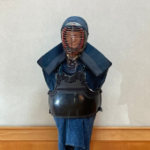
Alright, Haru chan!
Another day, another challenge!”
Yes, Uncle Bob!
Sorry for dragging you out here so early every morning.
Not just using my hands correctly, but coordinating my upper body and lower body as well. How could I connect my entire body and generate the kind of sharp, lively men strike that my sensei always demonstrates for us?
Uncle Bob and I were experimenting together, discussing all sorts of possibilities.
Then, among the dozens of men strikes I made that morning, there was one single strike that felt unusually good by my standards.
My whole body seemed to come together as if saying, “Alright everyone, let’s do this together!”
I wasn’t forcing anything, yet the strike felt both powerful and sharp.
When I finished the strike, it felt amazingly good.
“Ohhh…♡ Could this perhaps be what people mean by a Kiken-tai no Icchi men strike? ♪”
I was feeling rather pleased with myself.
Yoo-hoo!
What a great feeling! ♡
And maybe—just maybe—Uncle Bob looked a little pleased too.
But thirty seconds later, I never imagined I would be struck by such an enormous question.
There it is!
Haru Senpai’s dramatic overreaction series strikes again!
What happened, you ask?
Well, I wanted to reproduce that wonderful strike one more time.
So I started reviewing exactly what I had done.
I settled my kamae. Using my left foot and my core, I moved my body forward without letting my balance waver. At the same time, my upper body began moving the shinai under the guidance of my left hand, and finally both hands worked together to deliver a clean, sharp “SPAAAN!” into the men strike.
At least, that’s what I felt I had done.
And then suddenly—
“Huh?”
“Wait a minute…”
“What exactly IS this movement in the first place?”
“What am I even trying to express through this movement?”
That question suddenly appeared.
In other words, to put it simply:
“What exactly is shinai kendo?”
Has wondering about something so fundamental finally driven me completely neurotic?
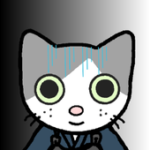
Have I finally become a crazy cat?
No, no!
I’m still sane!
Because there’s a very clear reason this question occurred to me!
What do I mean?
Well, structurally speaking, a sword and a shinai are completely different objects.
Because of that, they serve different purposes.
A sword is designed to cut.
A shinai is designed to strike.
Which means that the mechanics of cutting someone’s head with a sword and delivering a sharp strike through Kiken-tai no Icchi with a shinai should be completely different.
For example, when using an actual sword, people don’t use fumikomi-ashi, do they?
(At least, I’ve never seen a samurai in a jidaigeki fighting with fumikomi-ashi…)
So where exactly did fumikomi-ashi come from?
And why?
Eeeeeek…
I’ve been practicing kendo for nearly fifteen years, and now I’m suddenly questioning something like this.
What am I supposed to dooooo?!
Suddenly, I started feeling a little frightened.
Frightened by the realization that I may have spent more than fifteen years practicing kendo without understanding what I’m actually trying to do.
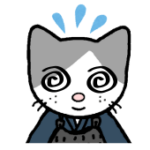
ガクガク((((;゚Д゚))))ブルブル
(shakes uncontrollably in fear)
Part of me even wanted to pretend I had never asked this question.
I’ve vaguely heard that many historical developments took place before modern shinai kendo became what it is today.
But since I’ve never seriously studied that history, I was genuinely struck by this enormous question:
“What exactly is shinai kendo?”
And ever since then, I haven’t been able to stop asking myself:
“What did the swordsmen of the past want to preserve within shinai kendo?”
That question has been stuck in my head ever since.
After returning home that day, I did a little research.
I found descriptions suggesting that even long ago, people already enjoyed kendo as a competitive activity, and that fumikomi-ashi developed during that period.
If that’s true, then sporting elements have been part of shinai kendo for quite a long time, and fumikomi-ashi was likely developed in connection with that competitive aspect.
However, I believe that shinai kendo contains important elements beyond competition alone.
So I decided to think more deeply about what our predecessors were trying to preserve when they chose to use a bamboo sword that is structurally so different from a real blade.
Although I haven’t found a clear answer, after a great deal of thinking, I did arrive at one possibility that may be common to both swords and shinai.
Oh-ho?
What did you notice?
That is the way we place our hearts and direct our spirit when facing an opponent.
Overcoming the fear within ourselves.
Resolving our hearts and challenging the opponent with our entire being.
Yet showing respect to that opponent from beginning to end.
Whether we hold a shinai, a real sword, or nothing at all in everyday life, these seem to point toward the same direction.
I also understand the idea that a shinai represents a sword, and therefore we must imagine the existence of the blade and its hasuji during practice.
Likewise, when practicing kendo kata or performing kirikaeshi with suri-ashi, movements that do not involve fumikomi-ashi, I feel that I can at least vaguely understand what I am supposed to pursue.
What remains the greatest mystery to me right now is this:
While using a shinai that can never truly cut,
while employing fumikomi-ashi,
during that climactic instant we call “the moment of striking,”
what exactly am I supposed to be expressing?
And how?
Without the answer to that question, I feel as though I’ve lost sight of the destination and become completely lost.
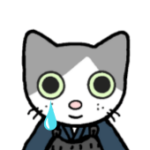
Waaaaah!
Where am I supposed to go from hereee?
So this morning, I switched from my shinai to a bokuto and decided to practice my usual large and small men strikes aimed at Uncle Bob’s head.
Immediately—
CLANK!
The men-gane and the bokuto collided.
And both the bokuto and Uncle Bob seemed to be saying,
“Hey! Ouch! What are you doing?!”
I felt terribly guilty.
Ouch… that must have hurt.
Sorryyyy…
But my curiosity simply wouldn’t go away.
So I gave Uncle Bob a break and used the tire striking dummy, imagining it as a person’s head.
Then I struck it with the same striking mechanics I normally use.
And the sensation I felt immediately afterward was…
“Ughhhh! I just inflicted a terrible head injury on Mr. Tire in a split second! I’m sorry!”
If I described in detail exactly how I experienced that feeling, it would get rather gruesome, so I’ll spare you.
But essentially, the sensation was:
“I didn’t take a life, but I just caused a very serious injury to the upper part of someone’s head in an instant.”
Hmm…
Now the mystery has only deepened.
Based on this experiment, should I continue striking men with a shinai while carrying the intention of inflicting a devastating injury in a single instant?
Is that the correct mindset?
For some reason, the answer still doesn’t feel entirely satisfying.
And so lately, I’ve been practicing while carrying around this cloud of uncertainty.
If I had been playing basketball instead, I’m quite certain that a question like this would never have arisen at all.
At this point, I feel like time-traveling back to interview the teachers who first developed shinai kendo.
Tomorrow is Tuesday. So we will practice Kata.
Perhaps practicing kata with a bokuto, whose structure is closer to that of a real sword, will provide another clue to me.
Anyway, that’s all for today.
I’m off to keiko again tomorrow! ♪
【Comment Dojo】