
While I was doing mitori-keiko, I found myself thinking about so many different things that I’ve had no shortage of blog topics lately.
This is Haru-chan, also known as Kendo Cat.
My “idea notebook” is
completely packed — heehee ♡
Today, I’d like to write about an incident that was honestly a bit painful for my ears — especially for someone as super self-centered as I am.
Now then, when you practice kendo, there are countless rules and things you have to be mindful of, right?
Not only during practice itself, but even before practice begins, there are already many things that require attention.
The most typical examples would be proper chakuso and checking your shinai.
But beyond those…
- Where you take off your shoes and where you place them
- How and where you put away your bogu bag and shinai bag before practice
- How you do rei to your partner and begin practice together
Honestly, there are things to be careful about everywhere you look.

I always want to start practice as soon as possible, so I tend to forget to check my shinai… Sorry about that.
Lately, my joints hurt all over, and tying any kind of Himo has become difficult. Every string feels like an enemy. What a problem!
If I think about these rules from a self-centered perspective, it’s actually quite easy to understand why they exist.
For example, when it comes to chakuso:
Wearing my keikogi and hakama properly, and putting on my bogu correctly, helps settle my mind and protects my own safety during practice. From that standpoint, proper chakuso clearly makes sense.
But realistically speaking, if…
- The do is slightly crooked left to right
- The men-himo are different lengths
- The men-dare flip up on both sides like a “tako (octopus) -men”
- The name tag tare isn’t centered
- The one of hakama himo is mysteriously peeking out from odd places
Unlike loose men-himo or do-himo that could immediately endanger you, these things don’t necessarily pose an instant safety risk.
Because of that, they often go unnoticed — both by others and by oneself — and practice continues as usual.
However, if we change our perspective and think from the viewpoint of a kenshi who always strives to practice with proper chakuso…
If my partner’s do is worn at an angle, or
if the name tag tare is off-center,
then when I face them head-on, something just feels unsettling.
I imagine it becomes difficult to focus 100% on practice.
It’s like my neck wants to tilt in response to my partner’s crooked do!
Let me give you an analogy.
Suppose a senior colleague at work says to me, with a serious expression:
“I want to talk to you about something important. Lunch is on me — will you come with me?”
I go together to eat yakisoba for lunch.
After both of us have eaten a bit and taken a breath, the senior leans in and says:
“Actually…,”
and begins to confide a very serious concern.
At that exact moment, I notice there is a huge piece of aonori (green seawed) stuck to the senpai’s teeth.
I desperately want to focus on what my senpai is saying.
I really want to listen seriously.
But every time my senpai open her/his mouth, that aonori pops up like, “Hellooo!”
At that point, there’s no way I can listen with 100% concentration.
And on top of that, it’s awkward to say to senpai,
“Um… you have seaweed stuck in your teeth…”
Nooo!
Please remove the aonori by yourself!!
You might think this is a pretty exaggerated comparison, but while I was doing mitori-Keiko, it suddenly hit me:
Isn’t aonori stuck on someone’s teeth kind of similar to sloppy chakuso?
Haru’s
Big Discovery Series!
In both cases, the person themselves isn’t aware of the issue, so they don’t care at all.
But the person looking at them can’t concentrate and feels unsettled — whether it’s listening to a story or focusing on keiko.
From there, my thoughts kept expanding, and I arrived at this conclusion:
The many rules established in kendo are not just for oneself.
Most of them exist also for others — in other words, for the sake of each other in practice.
Carefully checking my chakuso and shinai isn’t only to help my concentrate or protect my safety.
It’s also to avoid interfering with my partner’s practice and to avoid endangering them.
When doing rei and taking three steps forward before a tachiai, it’s not about bowing at my own pace and stepping forward however I like.
It’s about matching timing with my partner, bowing together, maintaining aiki, and raising our spirits together as we step forward — all to elevate the quality of our shared practice.
Cleaning the dojo both before and after practice isn’t just for our own safety, but also to ensure that those who will practice next don’t get injured.
And so on…
Suburi is the thing to be done alone, but every other aspect of kendo practice is done with others.
As long as there is someone standing in front of me,
if my practice thinking only about myself,
it feels like nothing will truly go well.
To do something for my partner, I first need to understand what my partner is trying to do.
And to understand that, I must observe her/him carefully and imagine what she/he is feeling.
In other words, I have to be able to sense the other person.
Huh…?
Wait a second…
Isn’t the attitude of practicing while respecting my partner and the attitude I take when facing my opponent and engaging in seme and defense completely different on the surface, yet rooted in the same essence?
When I think about it this way, it feels like every movement and action — from the very moment I step into the dojo — is filled with lessons to be learned.
And at the same time, it feels like these are exactly the kinds of things that someone stuck in a purely self-centered mindset would easily overlook.
Well…, Self-centered Cat Haru-chan is in big trouble.
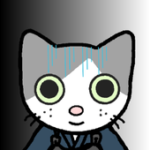
Oh, No…
It’s really hard to fix being self-centered!
I need to work on this hard.
But since the year is already coming to an end, I’ll reset my mindset and approach practice with a renewed heart starting next year.
And with that said —
I will go to practice again tomorrow! ♪
Comments