
Once upon a time, there was a mother raising two children.
The mother’s name was Suri-ashi.
Her children were Okuri-ashi and Ayumi-ashi.
Mother Suri-ashi raised both children with equal care, but as they grew, each of them gradually began to show their own individuality.
One day, Ayumi-ashi said proudly to her mother, puffing out her chest,
“Mom! Look! With just one step, I can walk this far! Isn’t that amazing?”
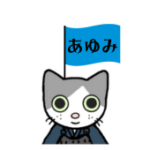
I can cover a long distance in a single step.
Then Okuri-ashi, not wanting to be outdone, eagerly appealed to her mother as well.
“Mom, look, look! Even without moving my body a lot, I can move this quickly—zip! zip! zip!
See? Just like a ninja! Isn’t it awesome?”
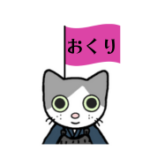
Hehehe, I can sneak up without being noticed.
Mother Suri-ashi felt proud as she watched her children grow, each understanding and making use of their own strengths. She gently spoke to them,
“You’re both wonderful, truly wonderful. Keep it up, and always remember that you are my proud children, that the blood of suri-ashi flows in you.”
Good job, good job
Yes! Ayumi-ashi will always be together with Mom Suri-ashi!
Yes! Okuri-ashi will never forget Mom Suri-ashi either!
The end…
No! No! This isn’t the end. The blog starts here.
Now then, today I’d like to write about something I was thinking while practicing Kendo Kata.
It’s related to the Suri-ashi family story at the beginning.
At our dojo, even beginners who have just started kendo practice all seven Tachi no kat and all three Kodachi no kata of Nihon Kendo Kata.
Since there is only one Sensei at our dojo, depending on the number of students and their level, there are times when Senpais like myself or Chudan-kun have to teach beginners.
I’m not exactly confident about whether it’s okay for someone like me to be teaching, though…
To help students who know nothing about Nihon Kendo Kata perform each kata properly, we as Senpais need to understand the kata thoroughly ourselves. Otherwise, we can’t convey the joy of learning kata to beginners.
Even if they can’t do it well right away, I want them to feel that joy.
Lately, I’ve been thinking that Kendo Kata is kind of like surume, dried squid.

Huh? Me? Why?
The more I chew it, the more flavor comes out…By the way, do Western countries have anything like surume?
Recently, while practicing kata or watching beginners learn, a question suddenly came to mind.
That question was about footwork in kata.
I understand that from Tachi no kata No1 to Kodachi no kata No3, everything is performed using suri-ashi. Actually, not only in kata, but also in shinai kendo, we use suri-ashi, all the time, right?
But then, why is it that in Tachi No.7, when Uchidachi strikes a big men, the strike is delivered using ayumi-ashi starting with the left foot?
Why is it that in Tachi No.3, as both Uchidachi and Shidachi engage in offense and defense, they switch between okuri-ashi and ayumi-ashi?
Why is it that in Tachi No.5, Shidachi retreats using ayumi-ashi while taking zanshin?
I realized that I didn’t fully understand the reasons why okuri-ashi and ayumi-ashi each appear when they do.
That’s when I was reminded of the Suri-ashi family skit at the beginning.
Ayumi-ashi and Okuri-ashi each have their own strengths. If these types of footwork are used in situations where their strengths can be fully utilized, then the three mysteries I mentioned earlier begin to unravel naturally.
At the same time, another question arose.
Have Uchidachi and Shidachi truly been creating situations where each type of footwork can be expressed in a logically appropriate way?
When the goal is to cover distance, it should be Ayumi-ashi’s turn. But if the maai doesn’t allow Ayumi-ashi to make use of its strength, then it might be tempting to leave it to Okuri-ashi instead.
However, if we do that, we can no longer perform the kata as prescribed.
In order for Ayumi-ashi not to have to give up its role, Uchidachi and Shidachi must work together, step by step, to prepare the stage for Ayumi-ashi’s moment to shine.
I see…
As my understanding of how to use Ayumi-ashi and Okuri-ashi began to come together, another question naturally followed.
Why is the direction of the response of shidachi to a Tsuki different between Tachi No.3 and Tachi No.7?
This too, if I think about it carefully, chewing on it like surume, I start to feel that I’ve found a possible answer.
Then another question arises.
What kind of intention is contained in the Tsuki of Tachi No.3, and what intention is contained in the Tsuki of Tachi No.7?
As I continue to think deeply about each detail, chewing and chewing, I can’t help but sigh at the realization that every single movement in Kendo Kata has its own 理合 riai.
I’ve chewed so much my jaw hurts.
It feels like there is no other option, like this is the only possible movement here.
Isn’t this what we call riai?
If I can study this and connect it to shinai kendo, then someday I hope to practice with confidence, thinking, “In this situation, this is the only waza that can happen.”
Whether we teach kata footwork together with its riai, or simply teach right, left, right as a how-to, will greatly affect how beginners understand Kendo Kata years later, and ultimately how their shinai kendo develops.
Wow… teaching really is a big responsibility.
Chudan-kun, Celery-senpai, everyone in the Suri-ashi family, let’s do our best together.
Oh, and Surume-kun too.
Yay!
Thanks for remembering me.
And with that, I’m off to practice again tomorrow.
Comments