The last practice of 2025 had safely concluded.
And just as I was finally able to take a deep breath and relax, I began my last kakari-keiko of 2025.

Huh? Haru-senpai,
I thought practice was already over this year-where did you do kakari-keiko?
Yes—when I say kakari-keiko, I don’t mean kendo this time.
I’m talking about my annual New Year’s cooking tradition—making osechi. In other words, my very own “kakari-keiko cooking.”
Generally speaking, people start prepping around December 29, and dishes that keep well are made in advance.
But I’m the type who tends to do everything “last moment”, so I always start on New Year’s Eve. I deliberately put myself into a kakari-keiko-like situation, and every year, on the night of December 31, I end up panting and groaning while making osechi.
This year was no exception.
I started around 11 a.m., and after 12 and a half hours, I somehow managed to finish just before the New Year arrived. By the time I’m done every year, I’m practically a living corpse…

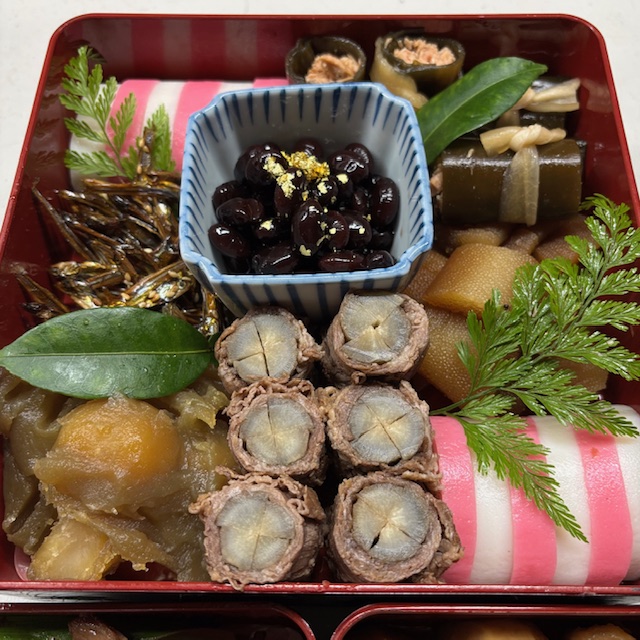
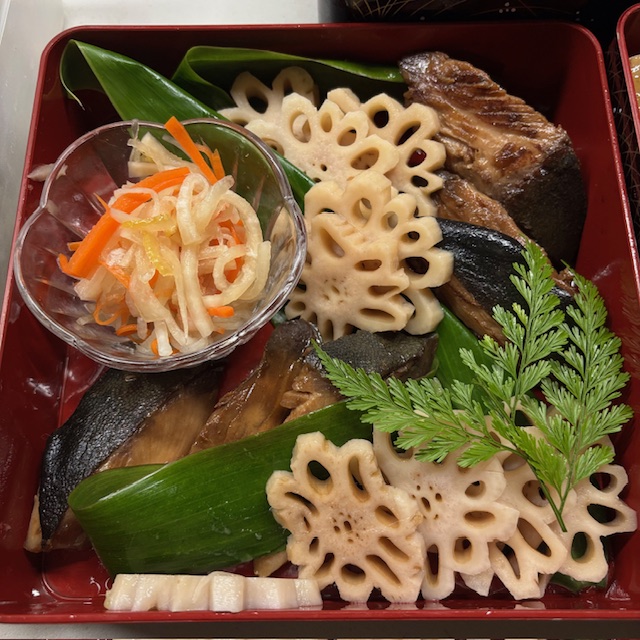
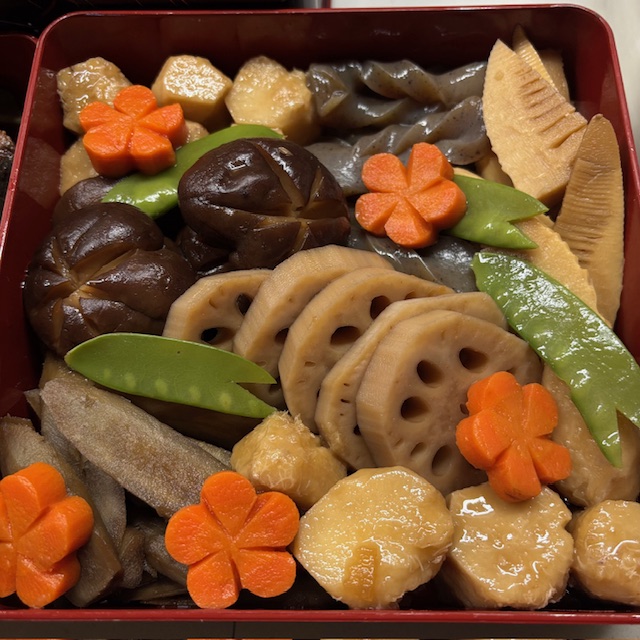
I—I did it again this year! It’s a little sparse, but… well, at least I can welcome the New Year properly.
Oh!
Can I eat some too?)

You’re on mochi duty only, Chudan-kun!
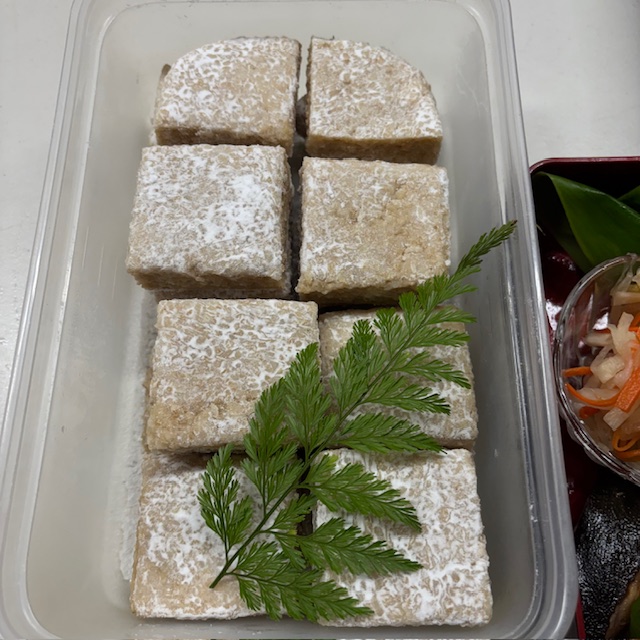
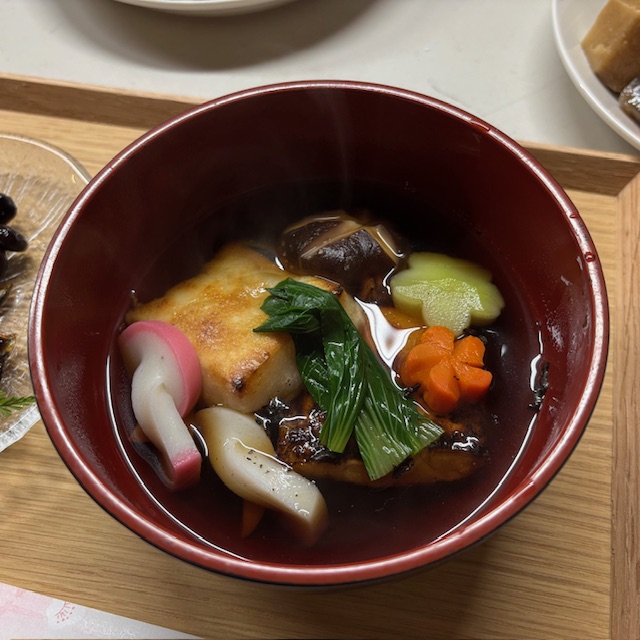
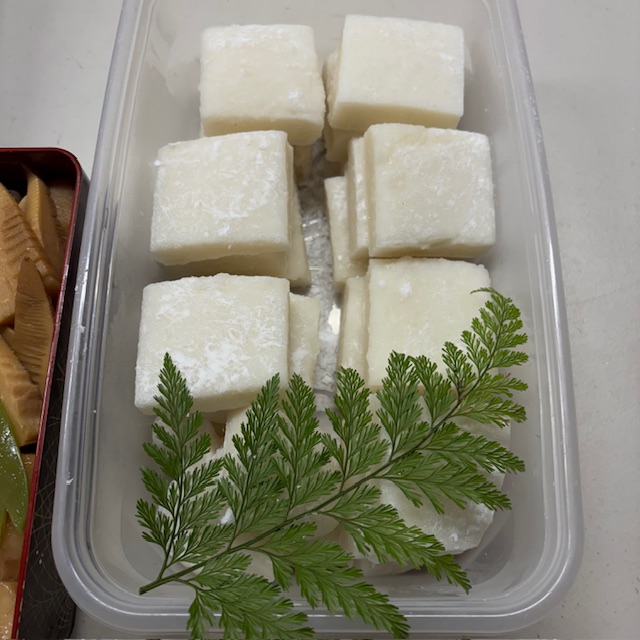
Now, you might be wondering why I’ve been talking about osechi instead of kendo this whole time.
Actually, while I was cooking, something suddenly struck me— and I’d like to write about that now.
I think the first time I ever tried making osechi was around 2003. Back then, I was trying my best to impress my boyfriend.
I’ve continued making osechi every year since then—more than 20 years now. The boyfriend who inspired it disappeared pretty quickly, though…
When I challenge myself with the same goal year after year for two decades, a lot of things come back to me.
In the early years, I clutched a cookbook, followed the recipes exactly, and pushed myself with one thought in mind: “Just make it look like osechi!”
Finishing was the top priority. And if the final result was about 70% complete, I figured anyone would still recognize it as osechi and say, “Wow, that’s amazing!”

Haru-chan, hmmm…you were surprisingly sly and full of a need for approval…
So it was always: Hurry! Hurry! Hurry!
I’d skip over fine details in seasoning, and when it came to patiently waiting for beans to simmer, I’d think, “I can’t wait anymore!” and just call it done.
The result?
Shiny black beans on the outside… but when I bit into them—rock hard! An early New Year tragedy inflicted on everyone around me.
Still, since it looked like osechi about 70%, my family and friends praised me.
But I knew—here and there, corners had been cut.
Even so, I couldn’t let go of the pleasure of being praised, and I continued making osechi this way for years.

Looking back, I was making osechi just to be praised
But over the past few years—especially this year—something inside me has changed.
While cooking, I found myself wanting to stay calm and think carefully about the nature of each ingredient.
Even when a process took time, instead of seeing it as troublesome, I faced it sincerely—and gradually, that time began to feel precious.
Of course, my goal was still to complete the osechi.
But rather than rushing forward with a restless mind like before, I focused on carefully and reliably finishing each step, one by one.
It felt as if I were having a conversation with the ingredients, checking on their condition as I worked.
By doing so, I believed I could bring out the best flavor and appearance of each ingredient. I know—it sounds a bit dramatic.
You might even say, “Have you lost your mind?” But for example…
While simmering black beans, I’d think,
If I were a black bean, would I want to get out of the pot by now?
Or while grilling yellowtail,
If I were this piece of fish, wouldn’t I be thinking, ‘I’m soaked in soy sauce already—get me out of this pan!’?
Cookbooks tell you how much seasoning to add and how many minutes to simmer—but those are just guidelines.
If the ingredient’s weight or the size of the pot changes, adjustments are necessary.
In the end, unless you truly understand the nature of the ingredients and seasonings, and make proper judgments based on the situation, even good ingredients won’t turn out delicious.
And yet, as I mentioned earlier, even at 70% quality, people praised me.
Being praised feels good.
But because I knew where I had cut corners, I could never feel 100% happy. Instead, I always felt a bit guilty—like I was deceiving people.
Cooking carefully without cutting corners requires patience and skill. But when you manage to do it, there’s a deep sense of satisfaction that comes from within.
Even if no one praises me, I can’t help but want to praise myself.

Even if no one praises me—self-praise is still an option!
Through making osechi, I think I’ve been gradually realizing these things unconsciously over the past few years.
And then this year—it hit me. You already know what I realized, don’t you?
I found out that this is exactly the same as learning kendo.
Why am I making osechi?
I can fool others, but I can’t fool myself.
I need to understand the opponent (or ingredient), “talk” with them, grasp the situation, and then make my decisions.
Even if something takes time and effort, if I calmly and steadily pile up small efforts, I may become able to do things I once couldn’t.
Wow! Learning kendo and making osechi have so much in common!
As I carefully carved lotus root and carrots into flower shapes on New Year’s Eve, these were the thoughts running through my mind.
And then I realized—
Even outside the dojo, in everyday life, there are countless opportunities to train the mental strength demanded in kendo.
The moment I realized that, I thought,
“So there’s no escaping practice, no matter where I go?!”
I honestly went, “Ughhh!!” hahaha…

Kendo follows me everywhere!
By the way…
Which came first—daily life or kendo?
Well… I’ll leave that question for next year.
This year, I struggled with back pain, but all in all, it was a pretty good year.
My black beans for osechi turned out soft this time, too.
Above all, I’m grateful to have made it safely through another year.
With that sense of relief, I welcome 2026.
Tomorrow—no practice! I’ll be enjoying my osechi♪
【Comment Dojo】