
Since injuring my lower back in late September, I haven’t been able to take part in regular practice, and before I knew it, two months had passed. Thankfully, I was finally able to resume training in late November.
This was the first time since joining my current dojo that I had been unable to participate in practice for such a long period.
But because of this experience, I feel that I was finally given the chance to stop, slow down, and reflect on many things—things I had never really taken the time to think about before.

I guess it had been a while
since I last sat down and thought calmly about anything…
I thought about many things, but today I’d like to write about one of them.
At our dojo, new students are required to fill out a form. Of course, it includes their name, but also important information such as an emergency contact, the date of their most recent health check, and their past and current health conditions—all essential details for practicing kendo safely.

One wrong step and you could end up seriously injured, after all.
These days, the form includes only this basic information, but in the past, there was an additional question:
“Why did you decide to start kendo?”
Perhaps the instructor wanted to understand each student’s motivation before guiding them. Come to think of it, the question “Why did you start kendo?” often comes up in casual conversations among kendo friends, doesn’t it?
For example, when I once asked Chudan-kun, he replied,
“Well… I read some manga and thought I’d give it a try… hehe.”

I read all of Rurouni Kenshin!
And then there’s Celery-senpai. If I remember correctly, she said something like:
“I was totally obsessed with basketball from middle school onward. Basketball is a team sport, right? Team play is fun, but from some point, I wanted to know how far I could go relying only on myself. And somehow… kendo just came to mind. Hehe.”
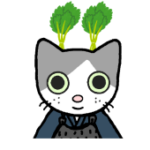
I am short, but I loved to play basketball.
If there are ten new students, there are ten different reasons for joining.
Even if you don’t know each other very well yet, knowing why someone decided to start kendo gives you a small but meaningful sense of who they are. Practicing together with that understanding feels… kind of nice.
But this wasn’t what I’d been thinking about during my mitori-keiko. What? All that was just the introduction? Too long!
What I had really been thinking about while watching practice was something else.
Actually, it might be better to say it’s something that has crossed my mind many times over the years—something I’ve thought about repeatedly without ever finding a clear answer.
It wasn’t the question “Why did I start kendo?”
It was this:
“Why do I continue kendo?”
When I first began mitori keiko time, I was plagued by anxious thoughts:
“What if my back doesn’t heal properly?”
“What if I can never practice the way I used to again?”
And when I imagined that I might not be able to practice as I had before, I felt my emotions being shaken violently.
“Nooooo!”
“I absolutely can’t accept that!!!”
I could hear my soul screaming.
I know it sounds dramatic, and honestly, I surprised myself—but truly, inside my head, it was full-on panic mode.

Seriously…
After that internal screaming match finally subsided and I calmed down a bit, a thought suddenly occurred to me:
“Huh? Why am I so obsessed with kendo practice?”
“Did I really like kendo this much?”
“I mean, I’m not a world championship competitor, and I’m not about to become the first female candidate for 8th dan. Even if I couldn’t do kendo anymore, couldn’t I just do something else? That’s how I’ve always handled things in life—finding something to replace what I lost…”
And eventually, the question I arrived at was:
“Why do I want to continue kendo so badly?”
Put another way, it feels like I’m thinking,
“Help! It would be a problem if kendo disappeared from my life.”
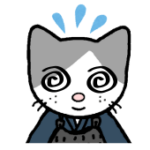
Why? Why this much?
As I mentioned earlier, the enrollment form asks, “Why did you decide to start kendo?”
That question, I can answer easily.
But if one day Sensei suddenly handed out a surprise quiz asking,
“Why do you continue kendo?” or
“Why do you want to keep practicing in the future?”
—how many students would be able to quickly write an answer and leave the dojo?
I’d probably be the one left behind, unable to write anything, stuck in the dojo long after everyone else had gone home.
Still, one thing I know for certain is this:
There must be a reason inside me.
I’m sure it exists. But no matter how much I try to uncover it, I haven’t been able to grasp it clearly.
During the first half of my two months of mitori keiko, this question resurfaced in my mind, and I found myself brooding over it again and again.
This time, though, since I was truly doing mitori keiko day in and day out, I couldn’t distract myself or forget the question. So that I had the rare opportunity to think deeply and persistently about a single topic.

Normally, I forget what I was thinking about
as soon as I start eating.
While doing mitori keiko, I noticed so many things.
And based on those observations, I was able to reflect on many different ideas. After doing this for nearly two months, I finally began to feel that I’d found something within myself.
“Ah… maybe this is the reason I continue kendo.”
That said, I’m not yet confident enough to declare, This is the answer!
So for now, I plan to keep this thought in mind, continue my dialogue with myself, and keep searching for the true reason why I continue kendo.
For the moment, though, I’m simply happy to be able to practice again. I feel, more deeply than ever, how precious it is to be able to practice as I always have. And I’m filled with gratitude for every part of my body that worked so hard to recover.
Thank you, body!
So—with that said, I’ll be heading to practice again tomorrow♪
。
【Comment Dojo】