Phew, I made it through today’s practice safely again.
Last time, Celery senpai guided me through a lot of things, and my mind and even my field of view have felt much clearer since then.
Maybe because of that, after practice today I was in a slightly cheerful mood as I packed up my bogu and started folding my keikogi and hakama.
Then, from somewhere, I could hear a conversation between a beginner and sensei.
I wasn’t eavesdropping—
well… I guess I was…
This beginner student had decided to take up kendo for the first time in his 60s.
The other day, he finally wore bogu for the first time, but he had a hard time putting it on—especially tying the mune-himo properly without them tilting to one side.
However, last week, he recorded the sensei’s demonstration on his smartphone and, over the weekend, practiced tying it dozens of times while watching the video again and again.
Come to think of it, last week his knots were too loose, and we had to stop practice to retie them. But today, that didn’t happen even once.
While listening in on their conversation, I felt deeply moved by this beginner’s attitude.
In kendo, there are so many moments where we have to “tie” something correctly,
🌸 When putting on the keikogi and hakama
🌸 When putting on bogu (tare himo, koshi himo, mune himo, men himos, kote himo…)
🌸 When putting on the tenugui
🌸 When tightening the tsuru or naka-yui on the shinai, and so on…
Each of these has a proper way of tying, and it’s not easy to master them all.
For me especially, when strings dangle in front of my eyes, my instincts kick in and I just want to play with them—so it’s actually harder for me than for humans!

I wanna play with the strings,
I wanna play~
Even though these things might seem like small, behind-the-scenes details—not flashy techniques that usually get the spotlight—this beginner understood its importance, worked on that seriously and sincerely, and turned something he couldn’t do into something he could do correctly.
That really touched me.
As I wrote in a previous blog, even if your chakuso is a little messy, it may not immediately cause a serious accident or endanger others.
However, I feel like it can still become like aonori ofyakisoba on one’s tooth—subtle, but it can influence the quality of practice and the atmosphere of the dojo more than we think.
Referenced blog↓

I want to have an immovable mind that isn’t shaken by aonori…
but I’m still far from that…
When I stop and think about “tying” like this, I can’t help but feel amazed at people from the past.
Now, we already have established ways of tying things—like how to tie the do-himo—and we simply follow them. But the person who first discovered, “This is the best way to tie this here”… that’s incredible.
For example, the mune-himo: if tied properly, they never come loose no matter how intense the practice gets. Yet when you take them off, they come undone instantly with just a quick pull.
Who on earth invented that?
Japan seems to have many traditions of tying things using only himo—without zippers, tape, or glue. And these aren’t just beautiful in appearance; they feel like they carry an ultimate kind of practicality that works in any situation.
Thinking about how bogu traces back to armor used in battles long ago, it makes sense that it had to be that way.
When we practice, it’s easy to focus only on improving our techniques. But through actions like tying and folding, we’re also learning a culture that has been cultivated over many years alongside combat.
This experience with the beginner reminded me of that once again.
My shinai is an important partner who fights alongside me.
My bogu, keikogi, hakama, and tenugui are important supporters that protect my body.
After practice, we check that everyone made it through safely,
say things like “Good job today!” and “Thank you!” to each other,
and make sure everything can rest comfortably in a safe place until the next practice…
That’s how I want to treat them.Even though I tend to get a bit careless sometimes… hehe.
Thinking about all that, I finished folding my hakama today as well.
It almost feels like I can hear my hakama says, “Phew… that was tiring today…”
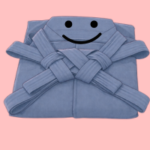
Beer! 🍺 Beer! 🍺
Hey, hey!
It’s still early morning!!
So, while continuing to work hard in practice, I want to remember to take good care of my equipment and kendo clothes too.
Alright, I’ll head to practice again tomorrow ♪
【Comment Dojo】